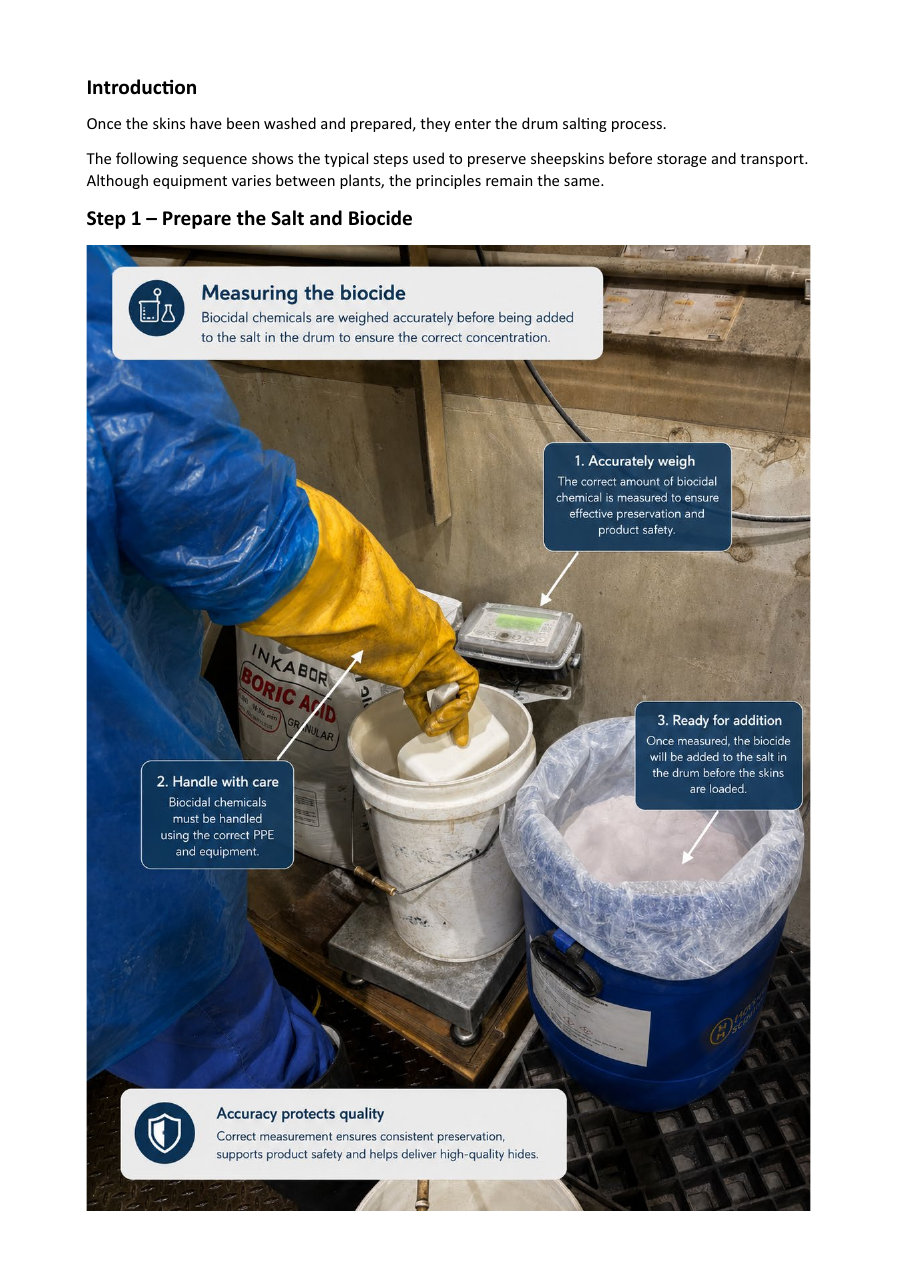
Prepare the preservative
Accurate chemical measurement is linked directly to consistent preservation, product safety and quality.
SHORT TECHNICAL COURSE
Practical workplace training in the salting, handling and drainage of sheepskins.
PRESERVATION IN PRACTICE
This LASRA short course uses photographs from the plant to follow the actual drum-salting sequence used for ovine skins. It connects each operator action with the preservation principle behind it.
Learners see how salt and biocide are prepared, why even distribution matters, how skins are loaded and run in the drum, and why drainage remains part of the preservation process after the drum stops.
A LOOK INSIDE THE COURSE
Accurate chemical measurement is linked directly to consistent preservation, product safety and quality.
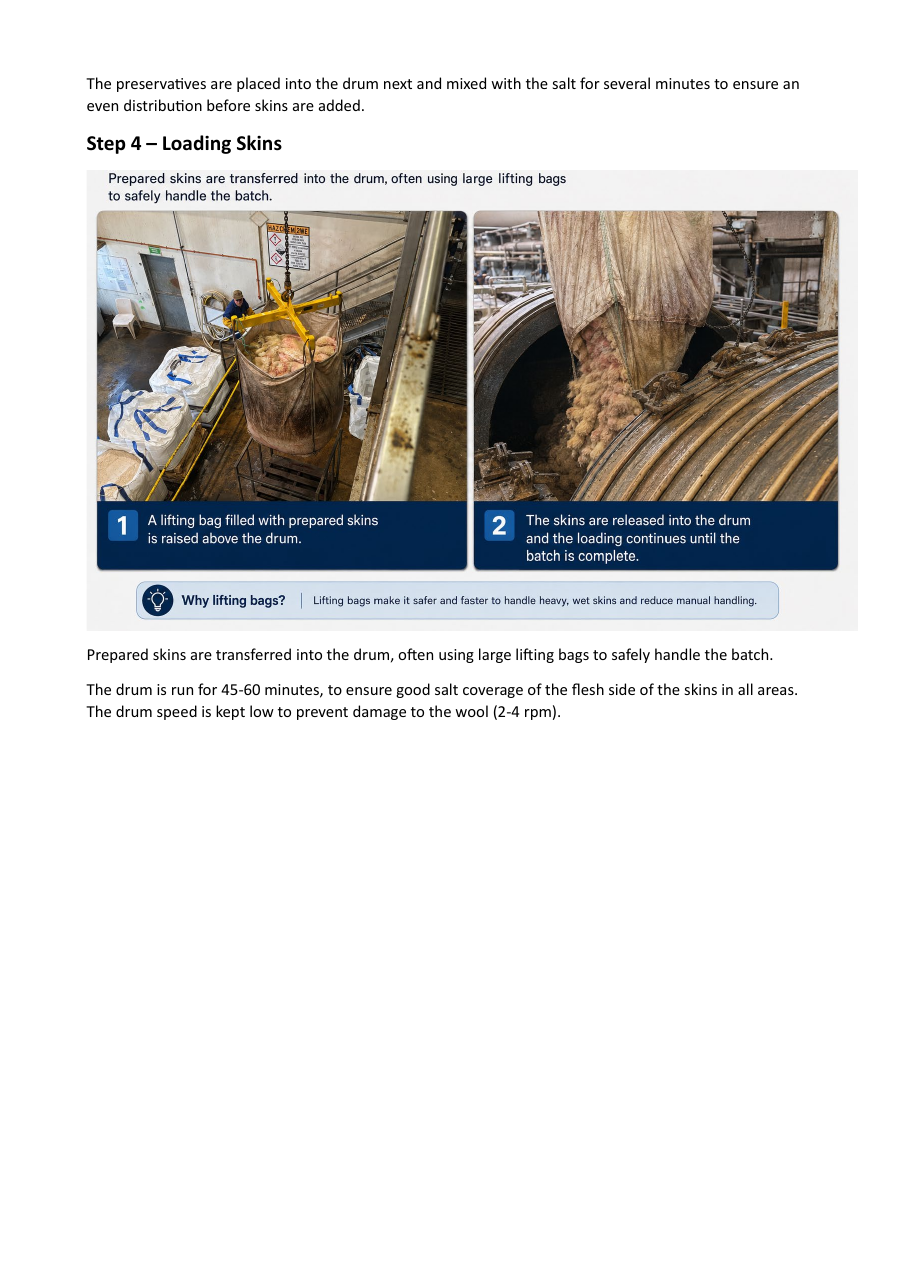
Large lifting bags reduce manual handling. Low drum speed helps distribute salt while protecting the wool.
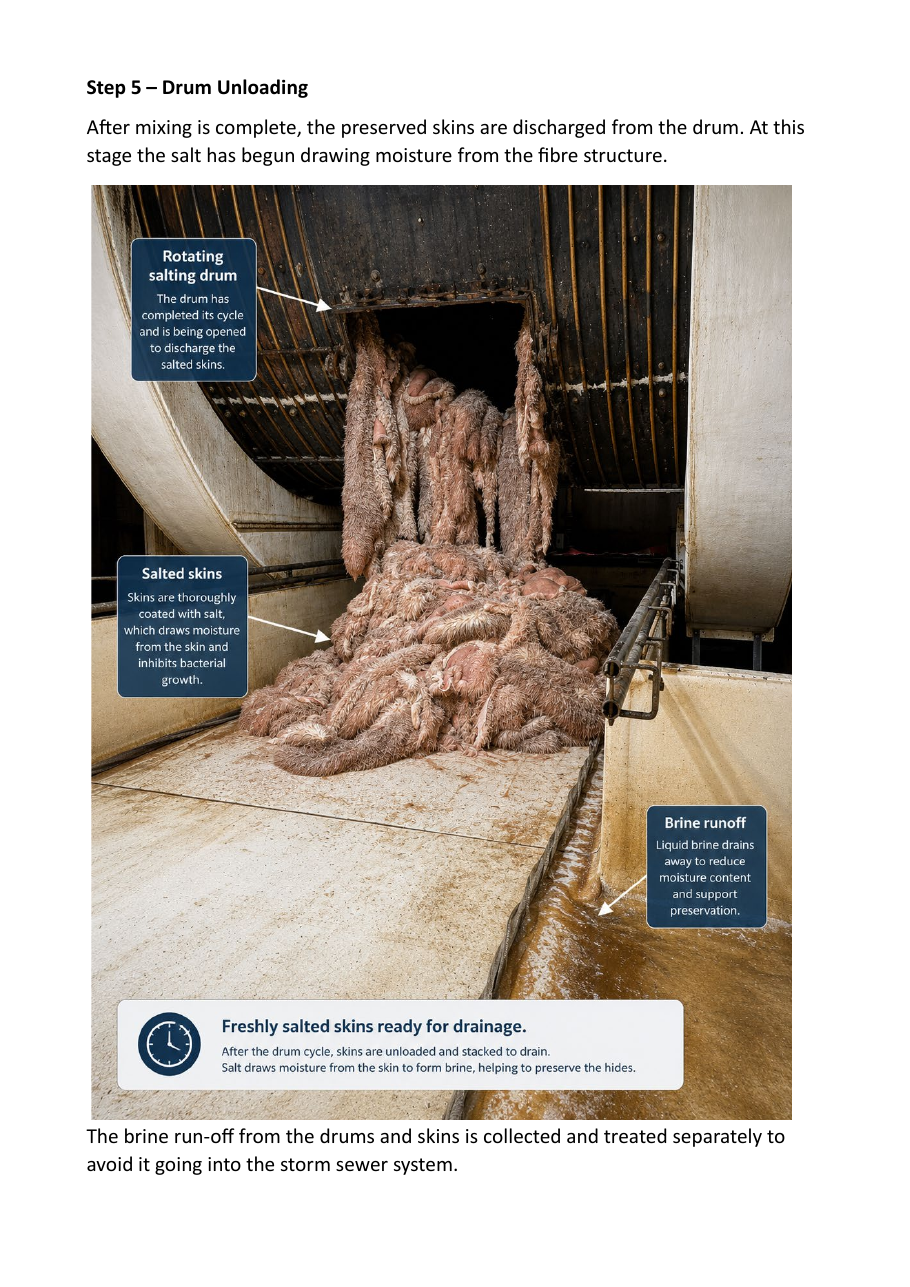
As salt draws water from the fibre structure, the resulting brine must be managed as part of the process.
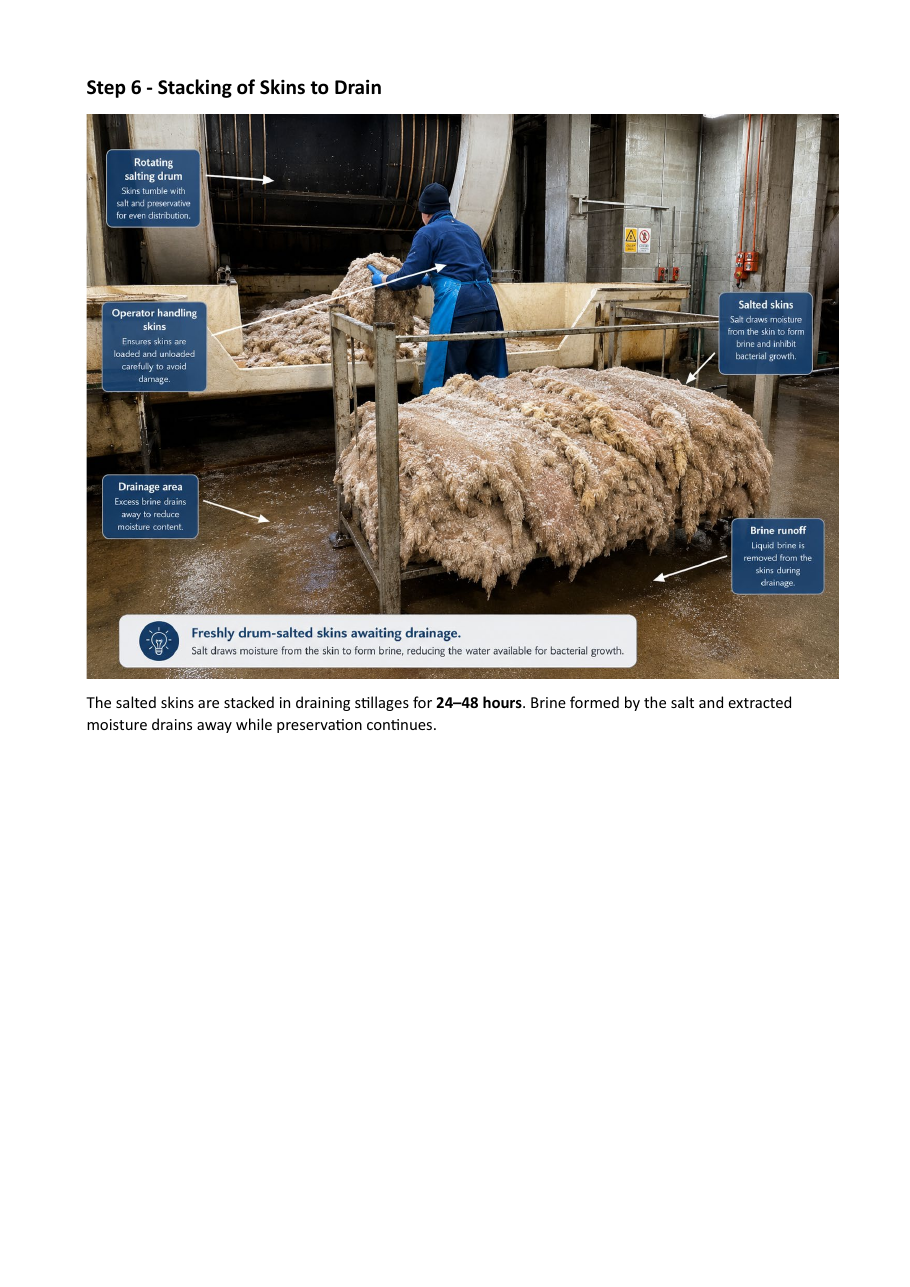
Skins are stacked to drain for 24–48 hours while brine leaves the material and preservation continues.
People involved in sheepskin handling, preservation, drum operation, loading, unloading and storage. The emphasis is on understanding why each operation matters as well as carrying it out safely and consistently.